
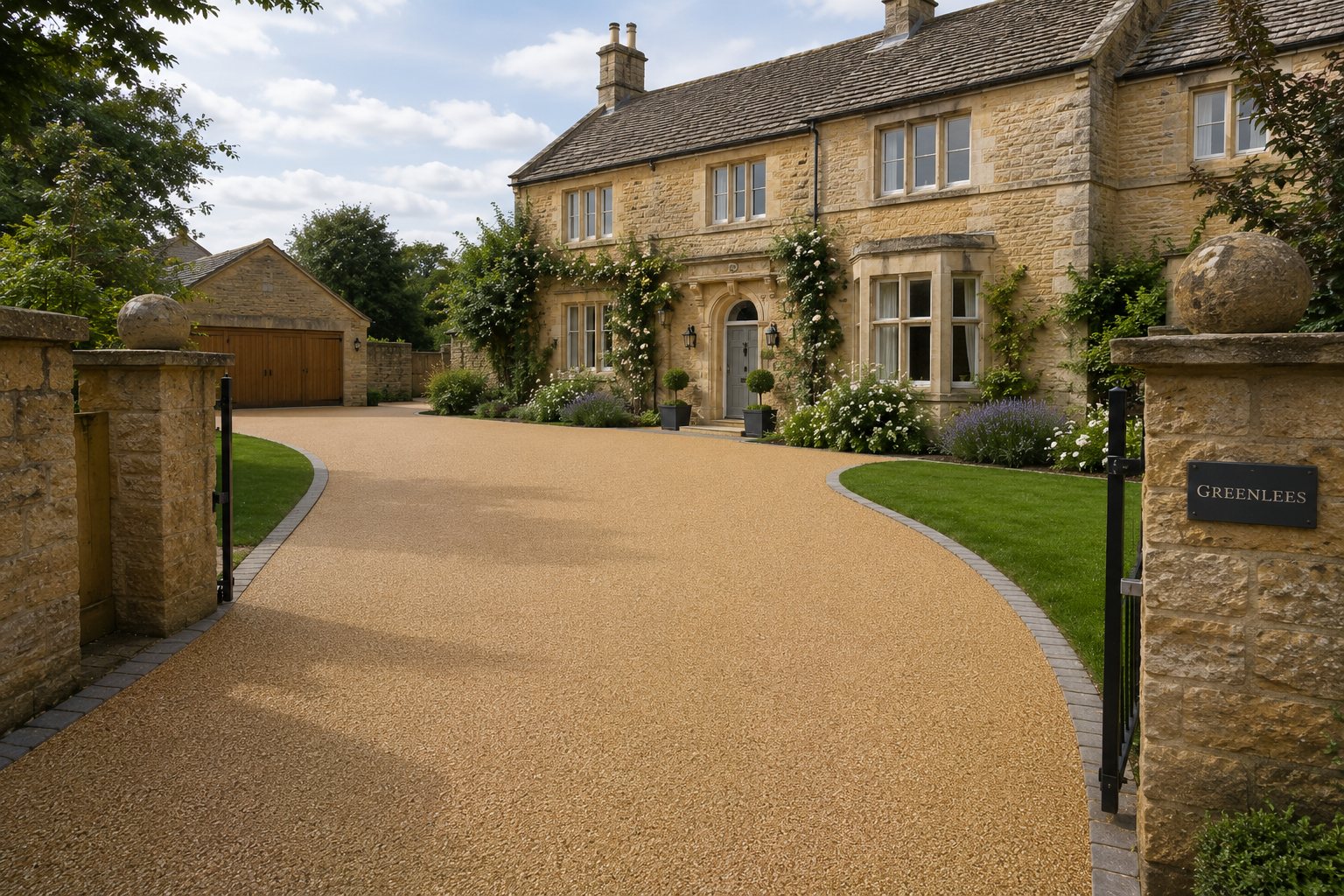
Drainage and SuDS
The least interesting page on this website and the one that decides whether your drive is still flat in five years.
Where is the water going?
Since 2008, if you pave over a front garden with an impermeable surface and let the water run onto the road, you need planning permission. If the surface is permeable, or if the water is directed to a soakaway, a border or a lawn on your own land, you generally do not.
That is the whole of it. Everything else is detail about how you achieve it. What matters is that somebody actually thinks about it before the stone goes in, because retrofitting drainage into a finished driveway is an expensive and destructive job.
On a lot of Milton Keynes estates the ground is clay and the water does not go anywhere quickly, which is exactly when this needs designing rather than guessing.
Five ways we deal with water
A fully permeable build-up
Permeable surface over open-graded stone. The whole driveway becomes the drainage system and there is nothing to block or maintain. Our default where the ground allows.
Soakaway
A stone-filled or crated void sized to hold a storm and let it out slowly. Needs a percolation test to size properly, and needs to be the right distance from foundations.
Channel drain
A linear drain across the threshold or at the low point, connected to a soakaway or a surface water connection. Simple, effective, needs occasional clearing.
Falls to a border
The cheapest answer where it works. Lay the drive falling away from the house into a planted border and let the ground take it.
Check baffles on a slope
On a long fall, dams within the sub-base hold water back in stages so it soaks in rather than sheeting to the bottom. Cheap to build in, impossible to add later.
Connection to surface water
Where a legitimate surface water sewer or existing connection exists, it may be the right answer — but never a foul drain, and never a neighbour's.
Design, not hope
Where drainage is critical we will dig a trial hole and run a percolation test rather than assume. It costs a morning and it is the difference between a soakaway that works and one that fills up in November and never empties.
The result goes into your proposal as a written drainage note, with the build-up drawn as a section. If it turns out your ground is free-draining sand and gravel, we will say so and save you the money on storage you do not need.
- Trial hole and percolation testing where the design depends on it
- Soakaways sized against the storm event, not by eye
- Kept the required distance from foundations and boundaries
- Levels set so water never runs towards the house
- Existing gullies and chambers surveyed before we design anything
Things people ask us
Do I need planning permission for my new driveway?
What is a soakaway and where can it go?
My drive floods now. Will a new one fix it?
Can I drain my driveway into the foul sewer?
Not sure where your water goes?
Neither are most people. It takes about twenty minutes on site to work out, and it is free.