

Tarmac driveways
Quick, cost-effective and genuinely the right answer for a long approach, a shared drive or a large parking area. Just not the answer to everything.
Tarmac is the most cost-effective surface for large areas, long approaches and shared drives, and it gets cheaper per square metre as the area grows. A new tarmac drive on a rebuilt base typically costs £90–£130 per square metre in Milton Keynes; where the base is sound, a plane and re-top costs far less.
- Typical cost
- £90–£130 per m² — cost guide
- Typical time
- 3–5 working days
- Surfacing
- Usually a single day
- Guarantee
- 5 years, in writing
Area, and the price of area
Tarmac gets cheaper per square metre as the area grows, which is the opposite of most surfaces. On a long farm approach, a shared drive serving several houses or a big parking area, nothing else comes close on cost.
It also goes down fast. A drive that would take a week in block paving can be surfaced in a day once the base is ready, which matters if the drive is the only way in and out.
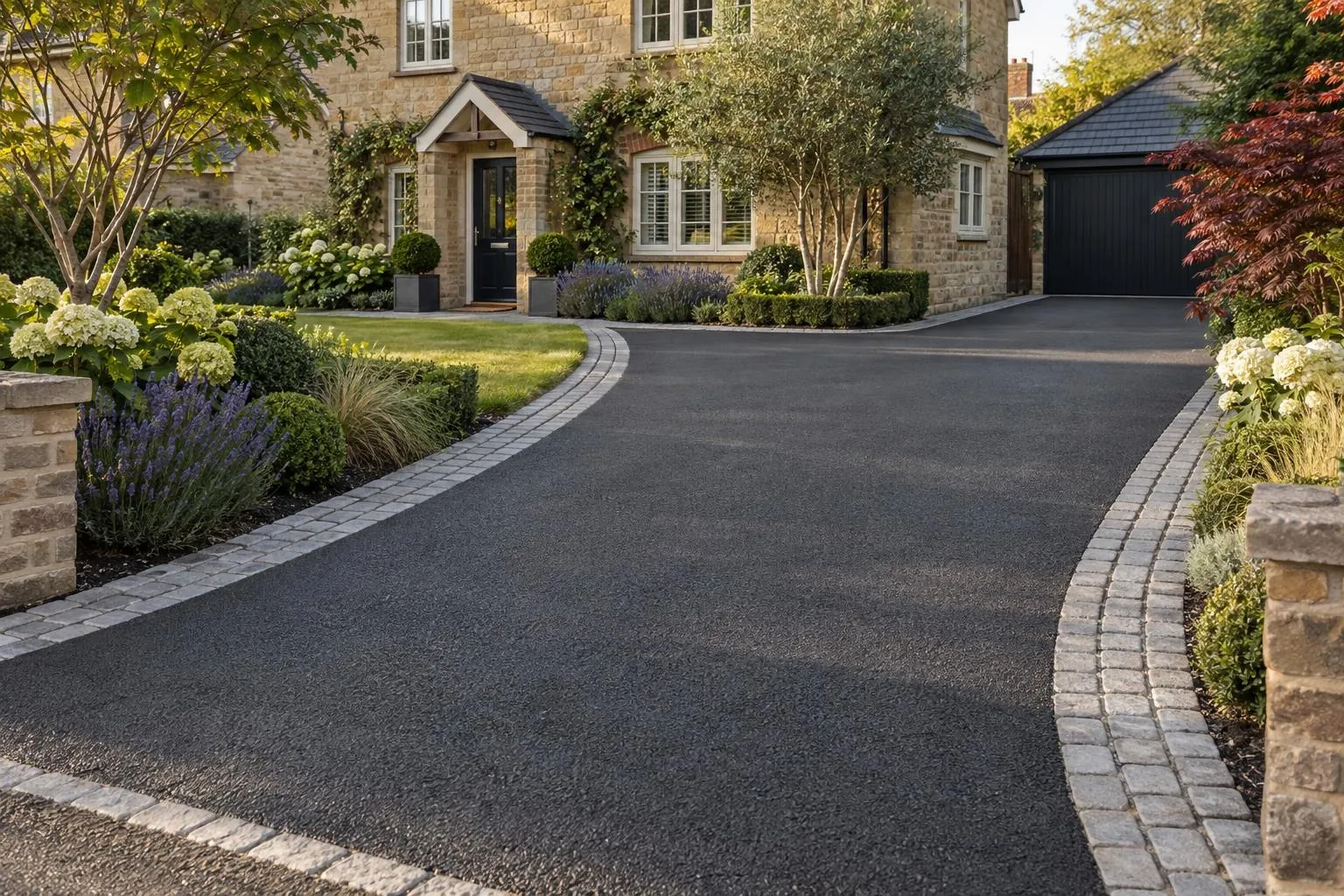
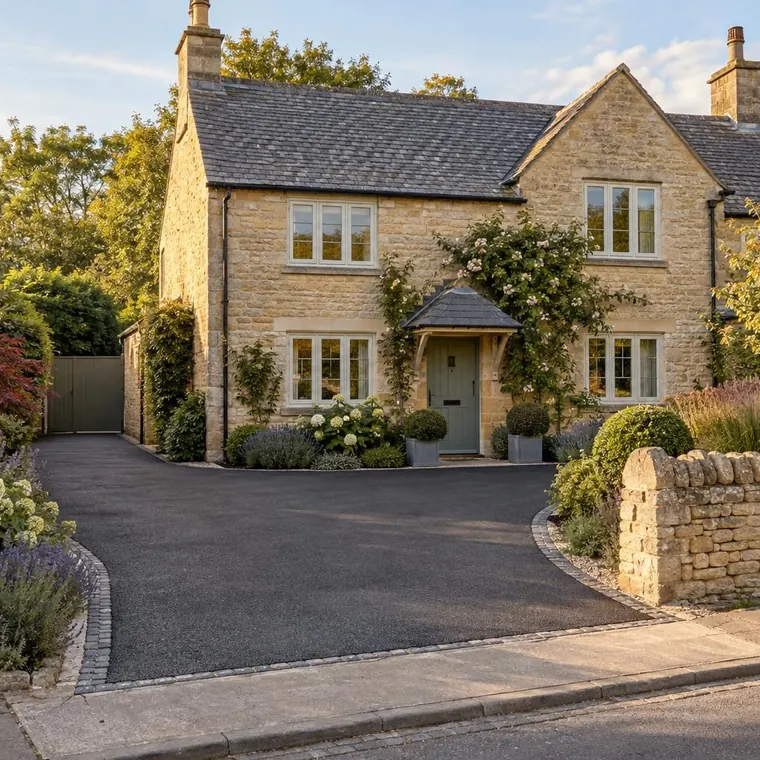
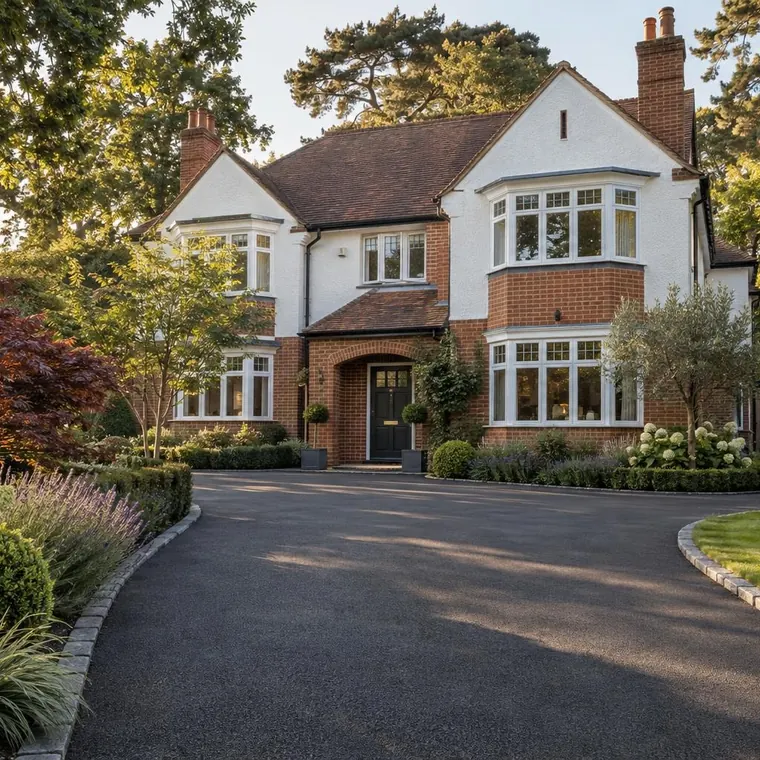
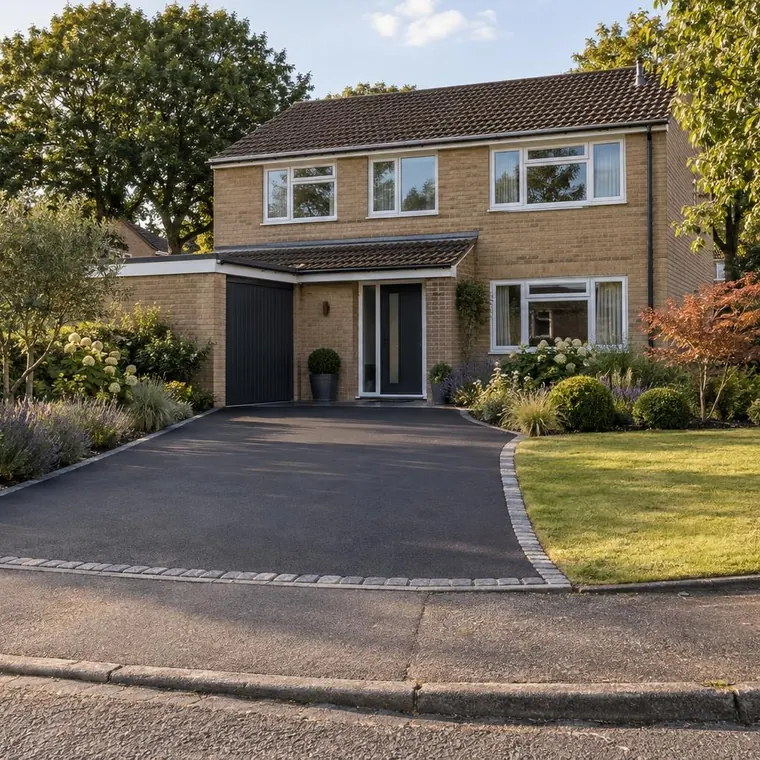
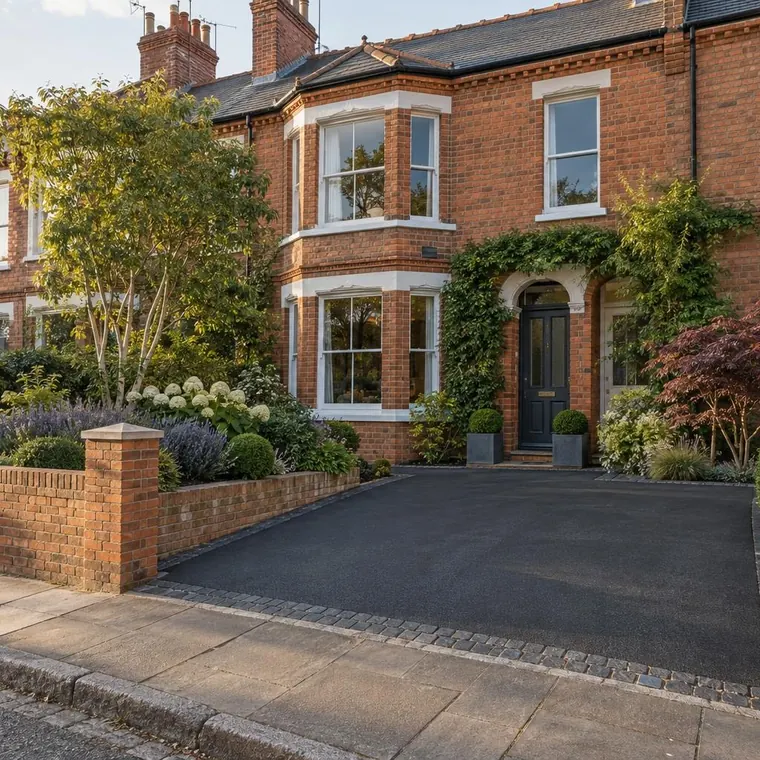
What it will not do is look special. Tarmac is a workmanlike surface. Where it wants to look better, a block or sett border and a proper entrance detail transform it for very little money.
Everything below is included in a tarmac driveway
Quick to lay, kind on the budget and the sensible answer for a long approach or a shared drive. A block or sett border lifts it enormously.
- A free design so you can see it before you commit
- A home visit with real samples, at a time that suits you
- Your old surface taken up and taken away
- Breaking out the old surface and base, priced in from the survey
- One price, agreed up front, with nothing added afterwards
- A tidy site every evening and no skip left on your road
- A five year guarantee, in writing, that transfers if you sell
Small tarmac jobs attract a delivery surcharge because a minimum load has to come out whether you need it or not. On drives under about 40 square metres we will often price block paving alongside it, because it can genuinely work out cheaper.
Resurfacing or rebuilding
There are two tarmac jobs and they cost very different amounts. Knowing which one you actually need is the first thing we work out on site.
Plane and re-top. Where the base is sound and only the surface has gone, we plane off the top layer, sort out any weak areas and lay a new wearing course. Fast, tidy, and it keeps your levels at the thresholds.
Full reconstruction. Where the base has failed — potholes that keep coming back, edges crumbling, ruts where the cars sit — there is no point surfacing over it. It comes out and gets rebuilt from formation.
- Insurance and damage claims handled with proper written specifications and photographs
- Shared drives quoted so each household can see their share
- Sett or block borders and entrance detailing available
- Existing gullies, channels and manholes reset to the new levels
Planning and dropped kerbs by council
A front driveway needs no planning permission if it is permeable or drains to your own lawn or border; more than 5m² of impermeable surface draining to the road does (Planning Portal guidance). A new or wider entrance also needs a dropped kerb, and who builds it depends on your council.
| Council | Towns we cover | Dropped kerb fees | Who builds the crossing |
|---|---|---|---|
| Milton Keynes City Council | Milton Keynes, Bletchley, Wolverton, Stony Stratford, Newport Pagnell, Olney, Woburn Sands, Bow Brickhill, Hanslope | £237 to apply, plus a £537 licence package | an NRSWA-qualified contractor under council licence (we can do it) |
| Central Bedfordshire Council | Aspley Guise, Cranfield, Woburn, Leighton Buzzard, Ampthill | £156 assessment fee, then the council’s quote | the council itself |
| Buckinghamshire Council | Winslow | £520.38 licence | a private NRSWA-qualified contractor you appoint |
| West Northamptonshire Council | Towcester | £330 licence and inspection fee | a contractor from the council’s approved list |
Fees from each council’s website, checked October 2026. See dropped kerbs for the full process in each town.
Things people ask us
How soon can I drive on new tarmac?
Why does my tarmac drive keep getting potholes?
Can tarmac be laid over block paving?
Is tarmac permeable?
How long does a tarmac driveway last?
Why do tarmac driveways crack?
Can new tarmac be laid over an old tarmac or concrete drive?
Does oil or petrol damage a tarmac driveway?
How thick should a tarmac driveway be?
What is the best time of year to lay a tarmac driveway?
Is tarmac or block paving better for a driveway?
Tarmac driveways near you
Local advice on ground, drainage, planning and prices for each town we cover.
- Tarmac driveways in Milton Keynes
- Tarmac driveways in Bletchley
- Tarmac driveways in Wolverton
- Tarmac driveways in Stony Stratford
- Tarmac driveways in Newport Pagnell
- Tarmac driveways in Woburn Sands
- Tarmac driveways in Bow Brickhill
- Tarmac driveways in Aspley Guise
- Tarmac driveways in Cranfield
- Tarmac driveways in Woburn
- Tarmac driveways in Hanslope
- Tarmac driveways in Olney
- Tarmac driveways in Leighton Buzzard
- Tarmac driveways in Winslow
- Tarmac driveways in Towcester
- Tarmac driveways in Ampthill
Free design, free visit, free samples
We measure up, talk it through and send a written proposal with the build-up, the programme and one whole price. No pressure and no follow-up sales calls.