

Gravel driveways
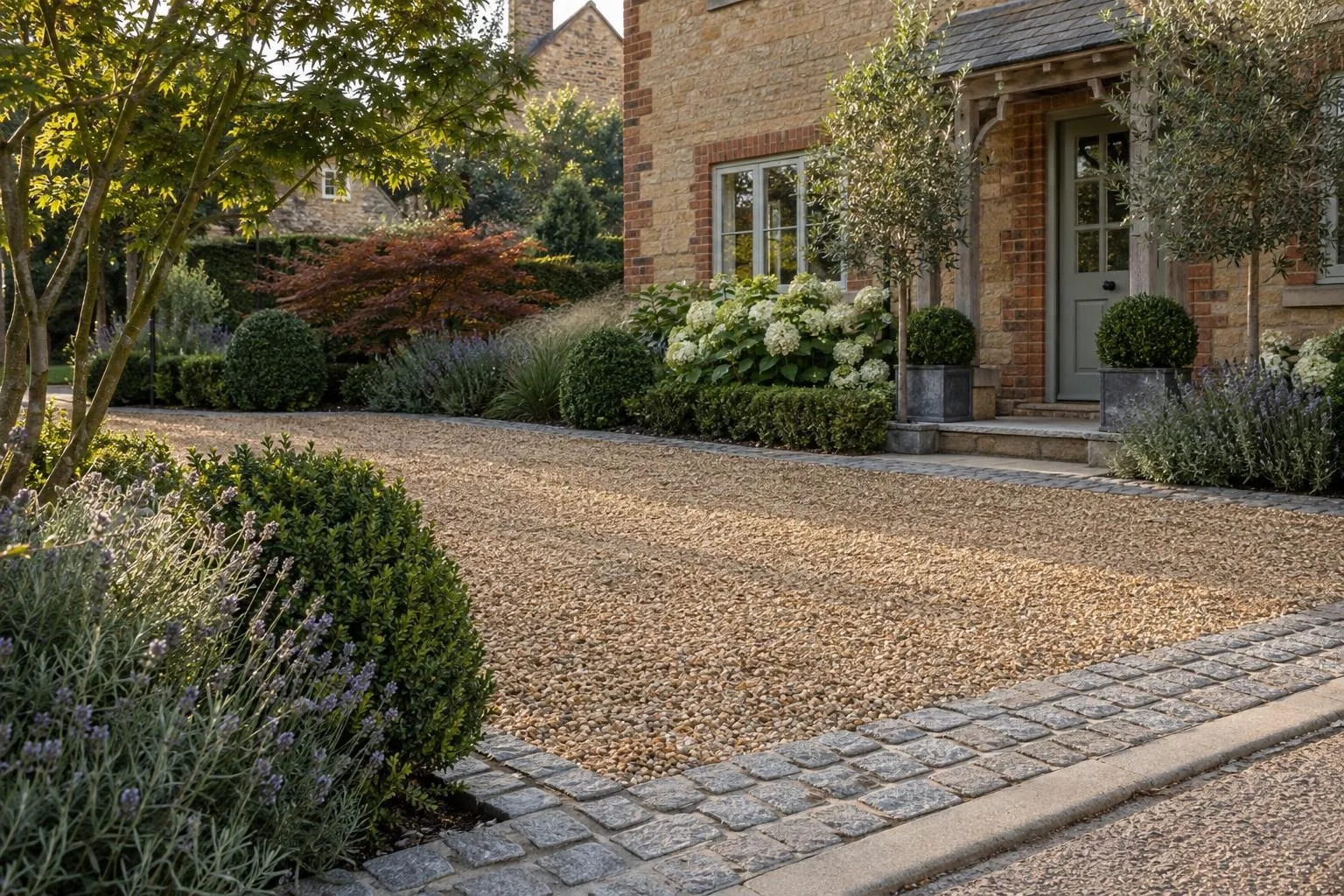
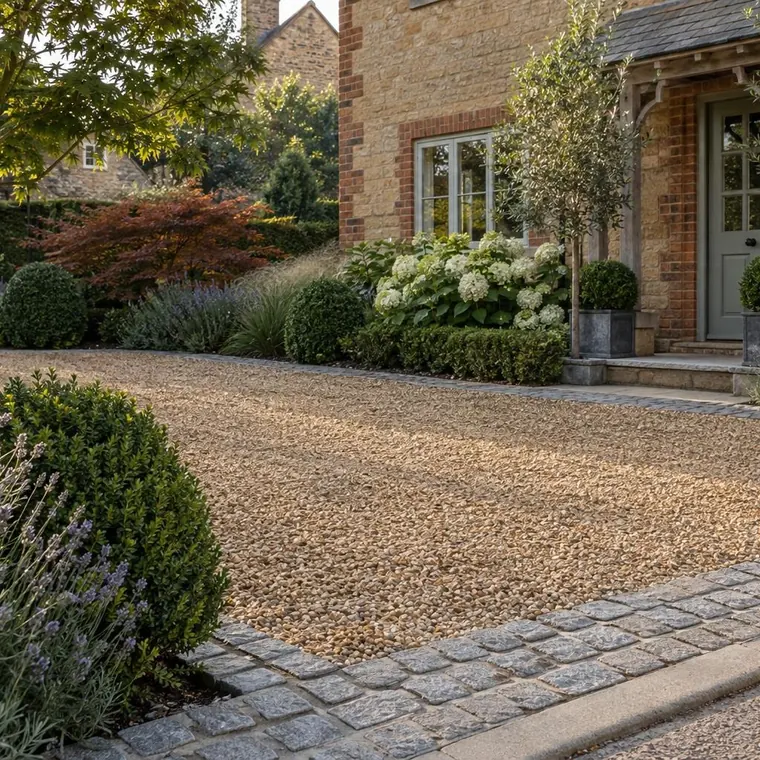
The right look for a stone cottage or a country approach, without the gravel ending up in the lawn, in the road and in the hallway.
A stabilised gravel driveway holds the stone in honeycomb grid cells over a permeable sub-base, so it does not rut, migrate or wear through to the membrane. It is the cheapest driveway surface — typically £60–£100 per square metre in Milton Keynes — and it is permeable, so it generally needs no planning permission.
- Typical cost
- £60–£100 per m² — cost guide
- Typical time
- 2–4 working days
- Permeable
- Yes
- Guarantee
- 5 years, in writing
The problem, and the fix
Loose gravel over a membrane is the cheapest driveway there is, and it behaves like it. It ruts where the cars sit, it migrates downhill, it walks into the house on the dog, and within two years there are bald patches over the membrane.
Cellular stabilisation grids solve all of that. The gravel sits in honeycomb cells that stop it moving sideways under a tyre. You get the same look, the same crunch and the same permeability, but a surface you can push a wheelbarrow across.
It costs more than tipping stone on a membrane and considerably less than resin. For a lot of village properties around Milton Keynes it is the most appropriate surface there is.
Everything below is included in a gravel driveway
The traditional look, without the gravel ending up on the pavement, in the lawn or in the hallway.
- A free design so you can see it before you commit
- A home visit with real samples, at a time that suits you
- Your old surface taken up and taken away
- Breaking out the old surface and base, priced in from the survey
- One price, agreed up front, with nothing added afterwards
- A tidy site every evening and no skip left on your road
- A five year guarantee, in writing, that transfers if you sell
Grids are laid on a blinded and levelled sub-base, not straight onto dug ground. If the surface below the grid is uneven, the grid will telegraph it and you will see it in the gravel.
The gravel itself
Angular stone locks together and stays put. Rounded pea shingle rolls, and in a grid it will still work loose at the edges. For a drive we specify angular 15 to 20mm as a default.
Colour is worth thinking about against the house. Golden and buff gravels sit naturally against limestone and ironstone; silver and grey work against render and modern brick. We will bring samples and put them down wet, because everything looks different in the rain.
- Angular 15-20mm as standard, not rounded shingle
- Edge restraints so the gravel has something to stop against
- Topping up included in the first year if any settlement shows
- Fully permeable, so surface water stays on your land
- Works well combined with a block or sett apron at the entrance
Planning and dropped kerbs by council
A front driveway needs no planning permission if it is permeable or drains to your own lawn or border; more than 5m² of impermeable surface draining to the road does (Planning Portal guidance). A new or wider entrance also needs a dropped kerb, and who builds it depends on your council.
| Council | Towns we cover | Dropped kerb fees | Who builds the crossing |
|---|---|---|---|
| Milton Keynes City Council | Milton Keynes, Bletchley, Wolverton, Stony Stratford, Newport Pagnell, Olney, Woburn Sands, Bow Brickhill, Hanslope | £237 to apply, plus a £537 licence package | an NRSWA-qualified contractor under council licence (we can do it) |
| Central Bedfordshire Council | Aspley Guise, Cranfield, Woburn, Leighton Buzzard, Ampthill | £156 assessment fee, then the council’s quote | the council itself |
| Buckinghamshire Council | Winslow | £520.38 licence | a private NRSWA-qualified contractor you appoint |
| West Northamptonshire Council | Towcester | £330 licence and inspection fee | a contractor from the council’s approved list |
Fees from each council’s website, checked October 2026. See dropped kerbs for the full process in each town.
Things people ask us
Will a stabilised gravel driveway still get walked into the house?
Can I use a gravel drive on a slope?
Do weeds grow through a gravel driveway?
How much topping up does a stabilised gravel driveway need?
How long does a stabilised gravel driveway last?
What size gravel is best for a driveway?
How deep should the gravel be on a driveway?
Will a gravel driveway drain on clay soil?
Is gravel or resin better for a driveway?
Can gravel be laid over an existing concrete or tarmac driveway?
When is the best time of year to lay a gravel driveway?
Free design, free visit, free samples
We measure up, talk it through and send a written proposal with the build-up, the programme and one whole price. No pressure and no follow-up sales calls.