

Block paved driveways
Unfashionable in some quarters and still the most sensible choice for a lot of houses. It is repairable, it takes a beating, and it does not care what the weather is doing on laying day.
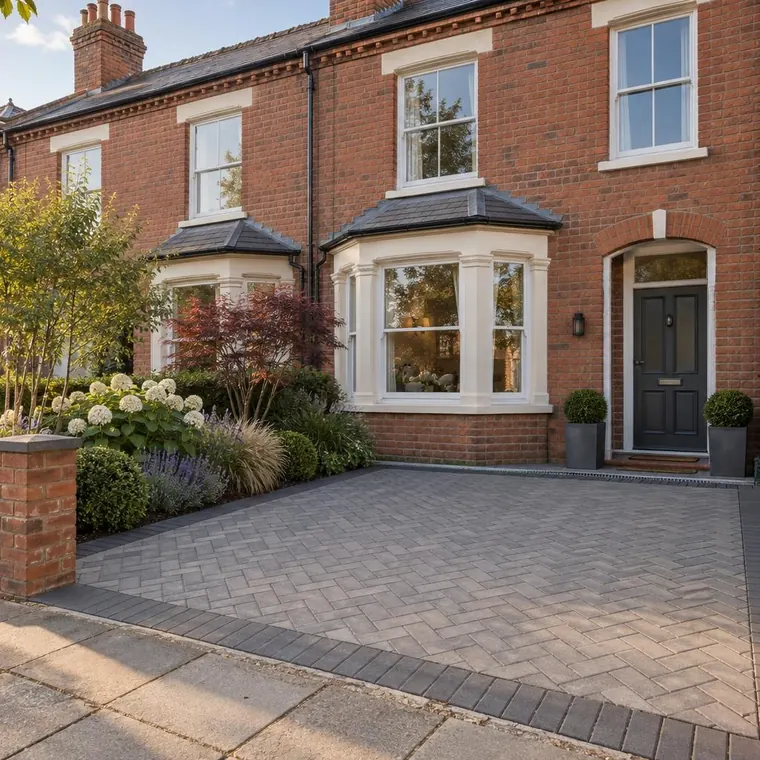
A block paved driveway is concrete or clay blocks laid on a compacted sub-base and sand bed, locked together with jointing sand. Most cost £120–£170 per square metre in Milton Keynes and take about a week; herringbone is the strongest pattern for cars, and on a proper base it lasts thirty years and more.
- Typical cost
- £120–£170 per m² — cost guide
- Typical time
- 4–7 working days
- Lifespan
- 30+ years on a proper base
- Guarantee
- 5 years, in writing
The surface you can take apart
Every other driveway surface is permanent. Block paving is not, and that turns out to matter. A service that needs digging up, a settled patch, a new gate post — all of it can be lifted, sorted and relaid with no visible repair.
It is also the most forgiving surface to lay in a British winter, which is why we can programme it when resin would be sitting under a tarpaulin waiting for a dry week.
The trade-off is joints. Joints take sand, sand takes seeds, and a block drive that is never touched will look tired sooner than a resin one. Jointing sand and an annual brush over deals with it.
Everything below is included in a block paved driveway
Hard wearing, endlessly repairable and available in more colours and textures than you will want to choose from. We will bring the samples to you.
- A free design so you can see it before you commit
- A home visit with real samples, at a time that suits you
- Your old surface taken up and taken away
- Breaking out the old surface and base, priced in from the survey
- One price, agreed up front, with nothing added afterwards
- A tidy site every evening and no skip left on your road
- A five year guarantee, in writing, that transfers if you sell
Where cheap block paving shows
Block paving is the easiest driveway surface to lay adequately and one of the hardest to lay well. The failures are always the same handful of things and none of them are visible on the day it is finished.
- Edge restraints bedded on sand instead of haunched in concrete — the edges spread and the field drops
- Laying course used to make up levels instead of screeded to a constant depth
- Cuts made with a hammer and bolster rather than a saw
- Blocks taken from one pack instead of mixed from three, so shade banding shows up
- Never vibrated and sanded twice, so the joints stay open
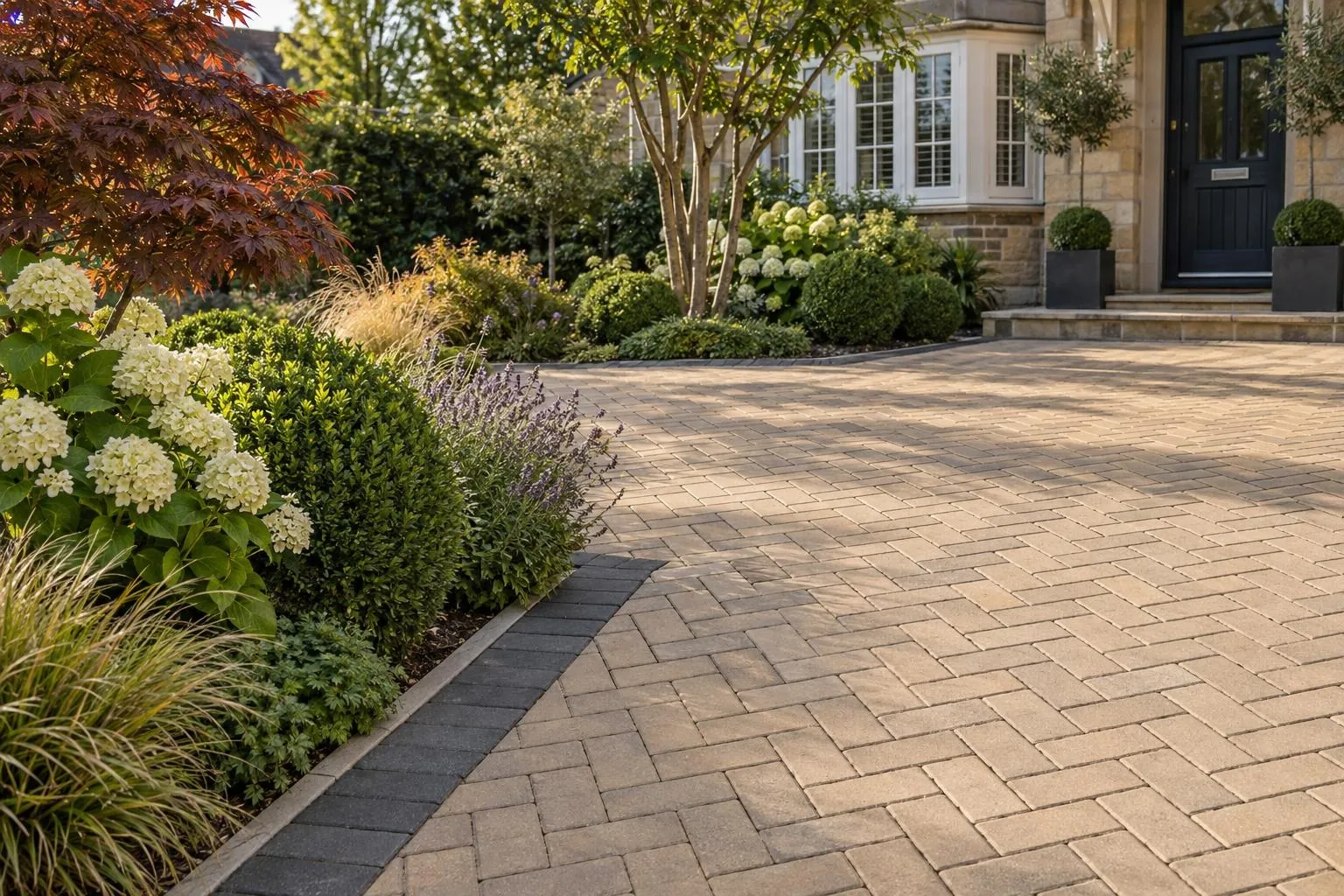
What you will need to decide
Block type
Standard concrete blocks, tumbled or aged blocks for older houses, or permeable blocks where drainage is an issue. We will bring samples to the visit.
Bond
Herringbone at 45 or 90 degrees for a drive because it interlocks under load. Stretcher bond is for paths and borders, not for anything a car turns on.
Border
A contrasting single or double course frames the drive and hides the cuts. It costs very little and it is the difference between tidy and finished.
Colour
Buff and brindle sit well against stone and older brick; charcoal and silver suit modern render and grey windows. Bear in mind it will lighten as it weathers.
Manholes
Recessed trays let the paving run across the cover so it almost disappears. Worth doing where a manhole sits in the middle of the drive.
Permeable option
Permeable blocks with open-graded stone below let the whole drive soak away, which solves a lot of drainage arguments before they start.
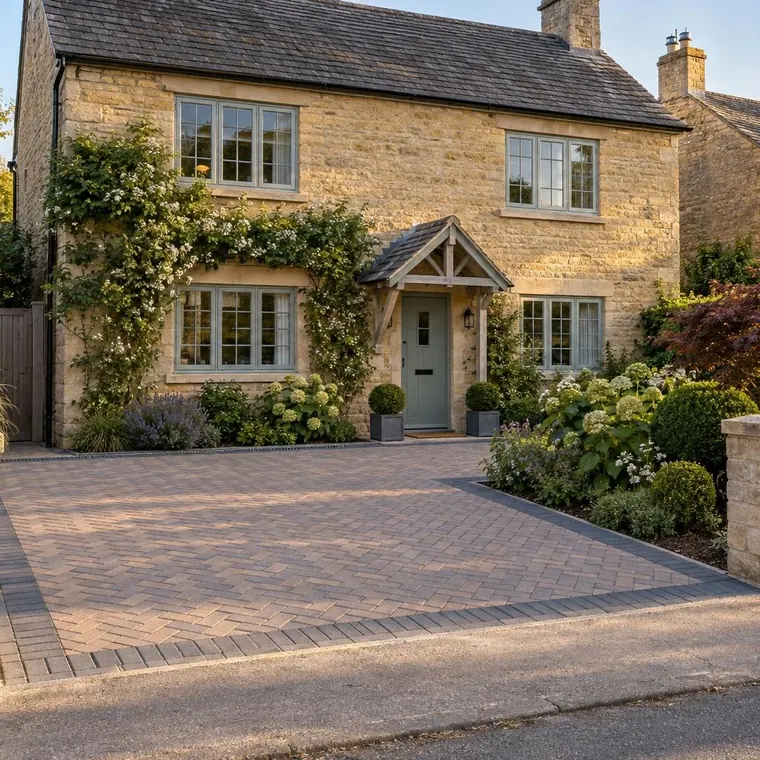
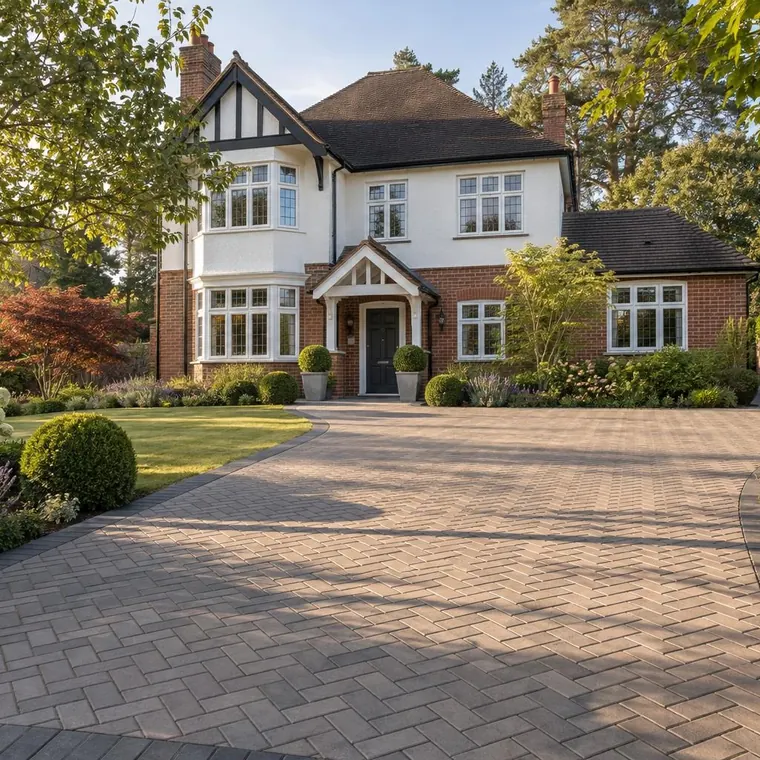
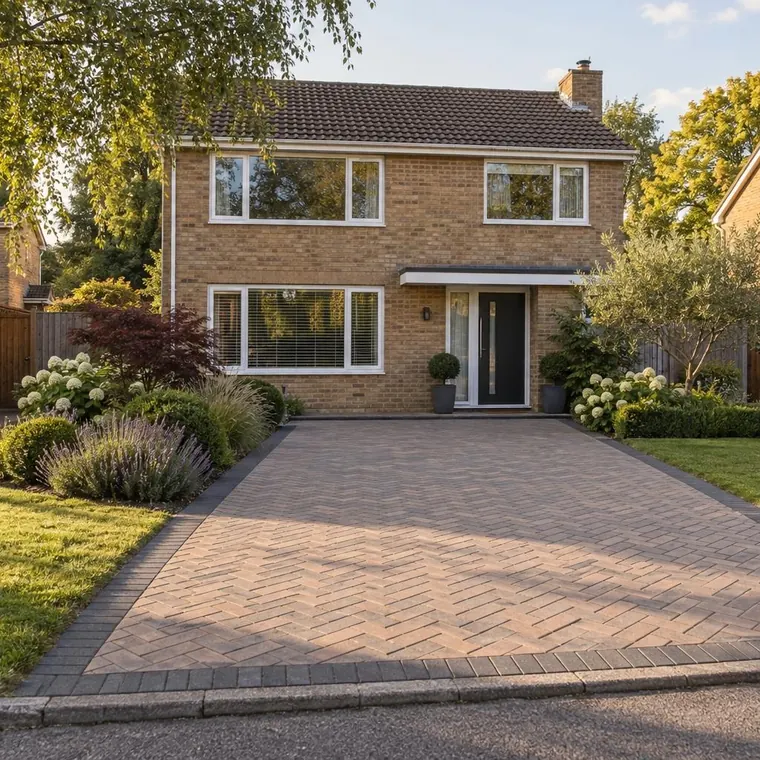
Planning and dropped kerbs by council
A front driveway needs no planning permission if it is permeable or drains to your own lawn or border; more than 5m² of impermeable surface draining to the road does (Planning Portal guidance). A new or wider entrance also needs a dropped kerb, and who builds it depends on your council.
| Council | Towns we cover | Dropped kerb fees | Who builds the crossing |
|---|---|---|---|
| Milton Keynes City Council | Milton Keynes, Bletchley, Wolverton, Stony Stratford, Newport Pagnell, Olney, Woburn Sands, Bow Brickhill, Hanslope | £237 to apply, plus a £537 licence package | an NRSWA-qualified contractor under council licence (we can do it) |
| Central Bedfordshire Council | Aspley Guise, Cranfield, Woburn, Leighton Buzzard, Ampthill | £156 assessment fee, then the council’s quote | the council itself |
| Buckinghamshire Council | Winslow | £520.38 licence | a private NRSWA-qualified contractor you appoint |
| West Northamptonshire Council | Towcester | £330 licence and inspection fee | a contractor from the council’s approved list |
Fees from each council’s website, checked October 2026. See dropped kerbs for the full process in each town.
Things people ask us
How long will block paving last?
Can you clean and re-sand an existing block paved driveway?
Will a block paved driveway sink where I park?
Can I have block paving and resin together?
How do you stop weeds growing in block paving?
What sub-base does a block paved driveway need?
How long does it take to lay a block paved driveway?
Can block paving be laid in winter?
Does block paving need sealing?
How do you get oil stains out of block paving?
Do block paving colours fade?
What does block paving cost?
Honest 2026 guide prices for block paved driveways in Milton Keynes, and what a proper quote should include.
Block paving driveways near you
Local advice on ground, drainage, planning and prices for each town we cover.
- Block paving driveways in Milton Keynes
- Block paving driveways in Bletchley
- Block paving driveways in Wolverton
- Block paving driveways in Stony Stratford
- Block paving driveways in Newport Pagnell
- Block paving driveways in Woburn Sands
- Block paving driveways in Bow Brickhill
- Block paving driveways in Aspley Guise
- Block paving driveways in Cranfield
- Block paving driveways in Woburn
- Block paving driveways in Hanslope
- Block paving driveways in Olney
- Block paving driveways in Leighton Buzzard
- Block paving driveways in Winslow
- Block paving driveways in Towcester
- Block paving driveways in Ampthill
Free design, free visit, free samples
We measure up, talk it through and send a written proposal with the build-up, the programme and one whole price. No pressure and no follow-up sales calls.