

Patios and terraces
Porcelain, sandstone, limestone and travertine, laid on a full bed with every visible edge mitred. No cut tile edges anywhere on the job.
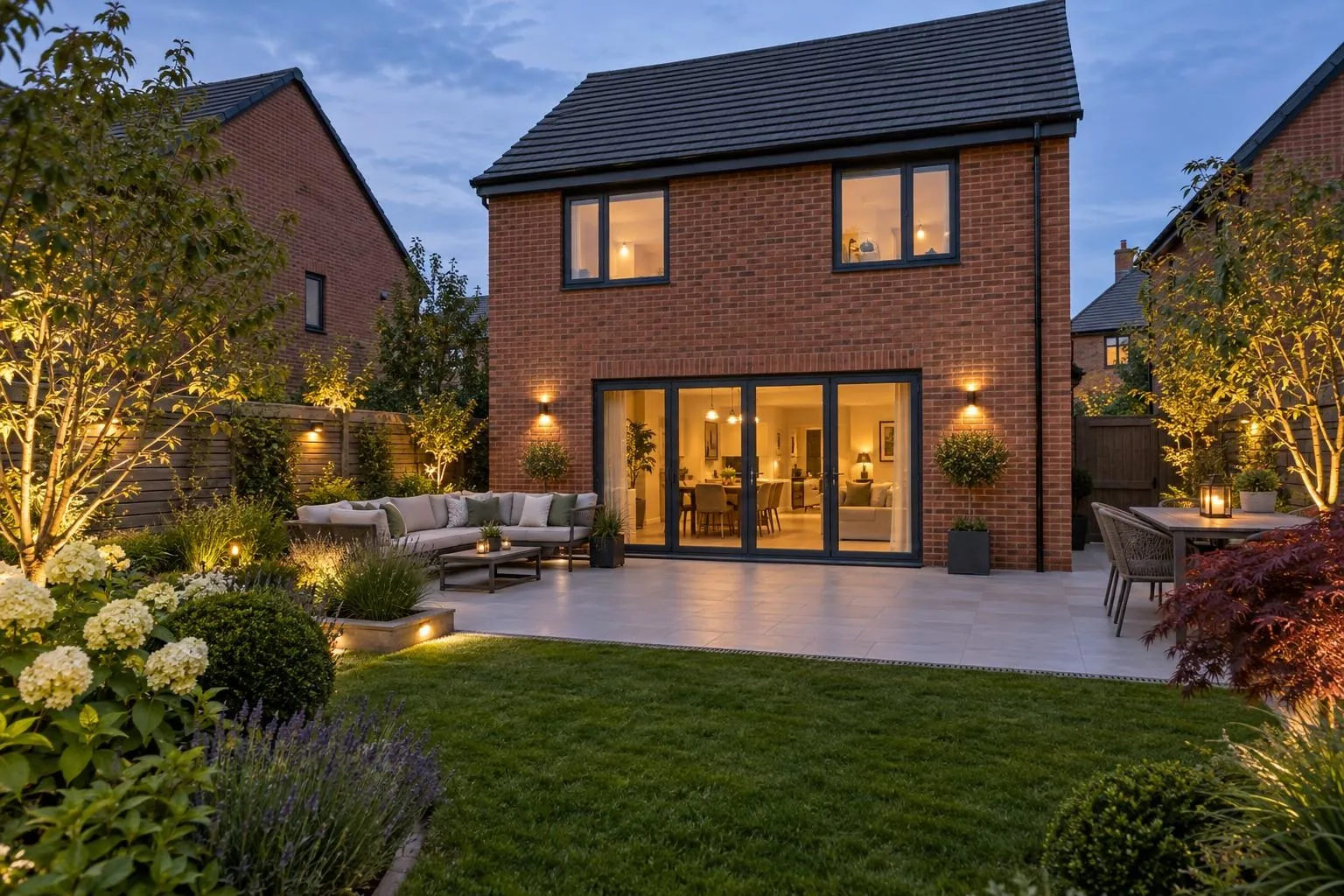
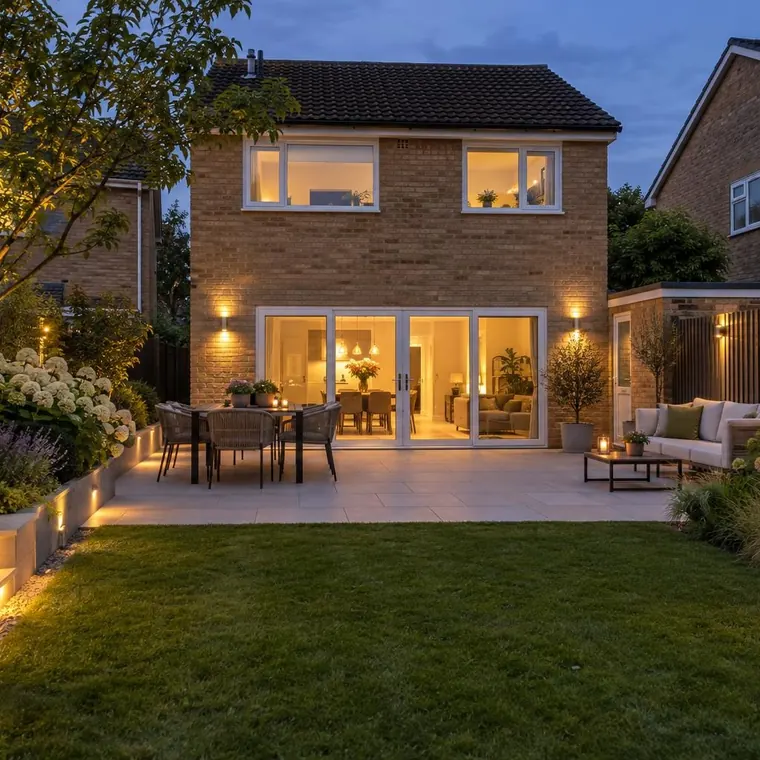
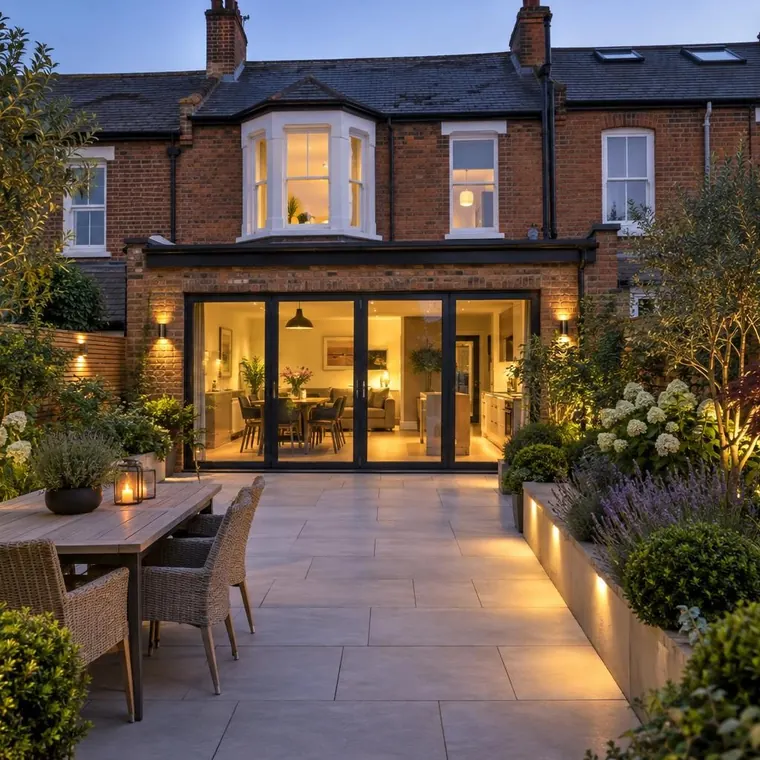
We lay porcelain, sandstone, limestone and travertine patios on a full mortar bed with a bonding primer where the slab needs it, falls away from the house and levels kept below the damp proof course. Porcelain patios in Milton Keynes typically cost £150–£200 per square metre laid.
- Typical cost
- £150–£200 per m² — cost guide
- Typical time
- 3–7 working days
- Guarantee
- 5 years, in writing
Free design
We will design your driveway or garden and show you what it will look like, before you have spent a penny or committed to anything.
Samples at your door
We bring the actual blocks, slabs and aggregates to the house so you can see them against your brick, in your light, in the rain.
One price, held
The figure we give you is the figure you pay. No day-rate creep, no extras invented halfway through, nothing added at the end.
The two things that actually matter
Most patio failures come down to one thing: the slab was not fully bedded. Spot bedding and five-dot bedding leave voids under the slab. Water gets in, freezes, and the slab cracks or rocks. It is faster to lay and it is the reason so many patios are lifting after three winters. We bed full, every time, with the back of the slab slurry-primed first.
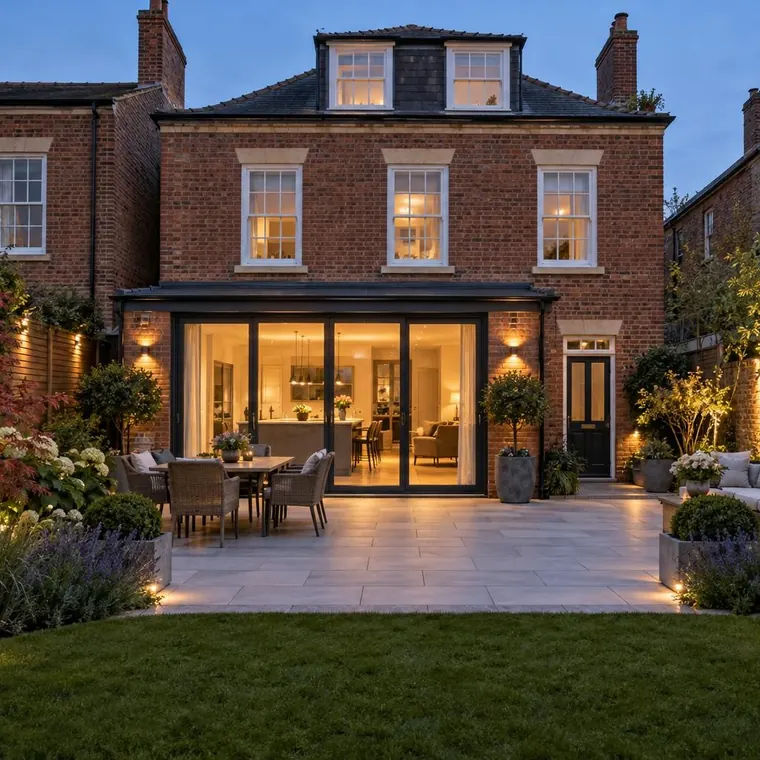
The second is the edge. A patio with sawn tile edges on show around the perimeter and the steps always looks like a tiling job. Mitring every exposed edge so the face material wraps the corner takes longer and costs more, and it is the difference between a patio and a terrace.
Neither of these is an upgrade on our quotes. They are what we do.
Everything below is included in a new patio or terrace
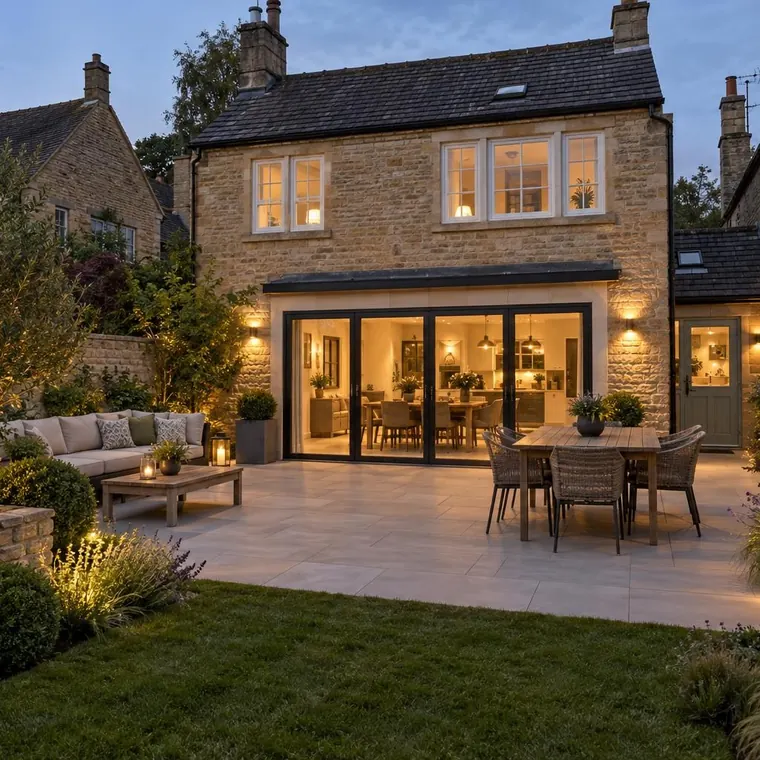
A proper outdoor room rather than a slab of paving. We design the shape, the levels and the lighting around how you will actually use it.
- A free design so you can see it before you commit
- A home visit with real samples, at a time that suits you
- Your old surface taken up and taken away
- Breaking out the old surface and base, priced in from the survey
- One price, agreed up front, with nothing added afterwards
- A tidy site every evening and no skip left on your road
- A five year guarantee, in writing, that transfers if you sell
What we lay
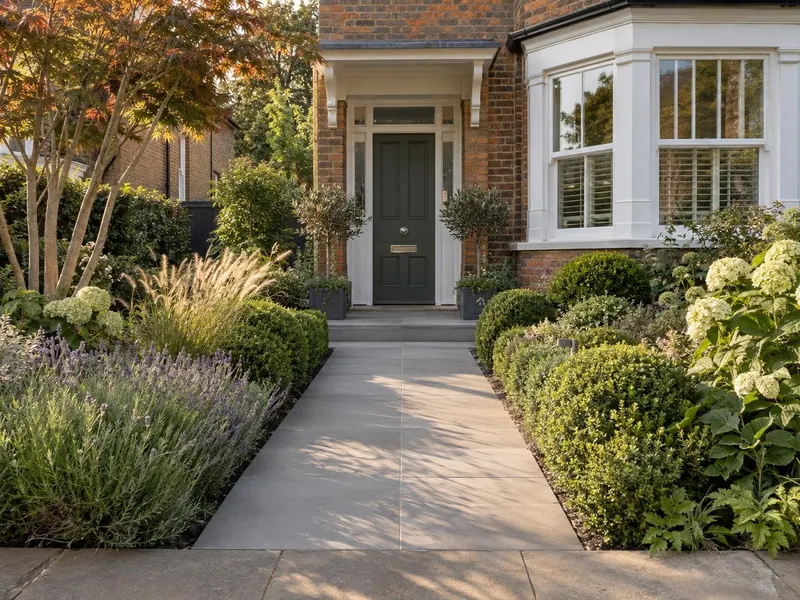
Porcelain
20mm vitrified porcelain. Effectively non-porous, frost-proof, does not fade and cleans with water. The most practical surface there is.
Sandstone
Riven Indian sandstone for character, sawn for a cleaner line. Warm, natural, and it moves in colour when wet.
Limestone and travertine
Pale, calm and beautiful against stone houses. Needs sealing and a bit more care than porcelain.
The things that finish a patio
A patio is mostly a big flat area, so the quality lives entirely in the edges and the junctions. That is where we spend the time.
- Every exposed edge mitred, including step nosings
- Falls set at 1:80 away from the house and checked as we lay
- Joints brush-filled, struck and washed down properly
- Slabs mixed from several packs so shade banding does not show
- Full-size slabs at the eye lines, cuts kept out of sight
- Levels set so the patio sits safely below your door threshold
Things people ask us
Should I choose a porcelain or natural stone patio?
Does a porcelain patio get slippery when wet?
Can a new patio be laid over an existing patio?
What are the white marks that appear on a new patio?
Does a new patio need sealing?
How far below the damp proof course should a patio be?
What fall does a patio need?
What base does a patio need?
How long does it take to build a patio?
Do I need planning permission for a patio?
How long does a patio last?
How much does a new patio cost in Milton Keynes?
Free design, free visit, free samples
We measure up, talk it through and send a written proposal with the build-up, the programme and one whole price. No pressure and no follow-up sales calls.