

Fencing, decking and screening
Boundaries that stay vertical and decking that does not bounce. Slatted screens, close board, composite decking and sleeper walls.
Fences fail at the posts, not the panels. A 1.8m post wants at least 600mm in the ground in a properly mixed concrete collar; you can generally build to 2m in a rear garden and 1m next to a highway without permission, though conservation areas and estate covenants can change that.
- Post depth
- 600mm minimum for 1.8m
- Height limits
- 2m rear, 1m by a highway
- Guarantee
- 5 years, in writing
It is always the posts
Fence panels do not fail. Posts do. They rot at ground level, they were never set deep enough, or they were bedded in soil with a bag of postcrete thrown on top and no water added.
A 1.8m fence post wants 600mm in the ground as a minimum, in a properly mixed concrete collar with the top shaped to shed water. A 3ft screen post does not need the same depth, and we do not pretend it does.
Get that right and the panels become a maintenance item rather than a recurring disaster every time it blows a gale.
What we install
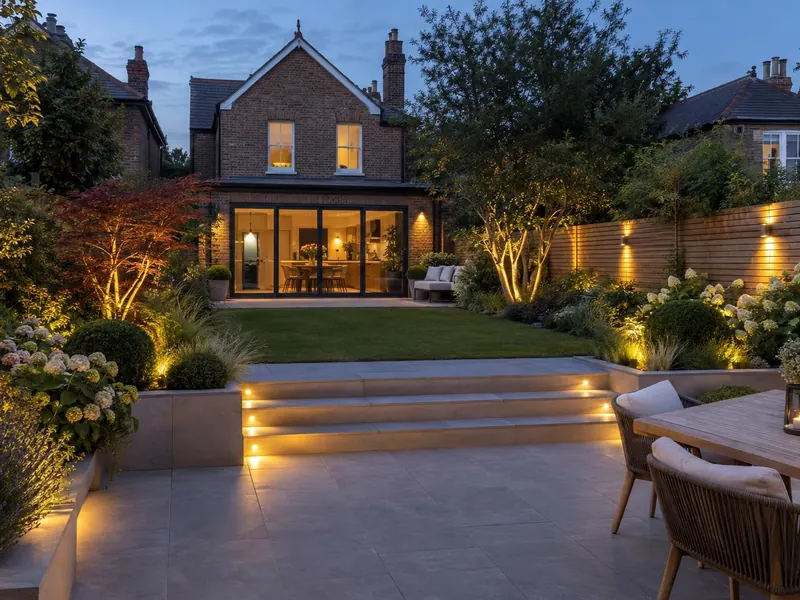
Slatted screening
Horizontal slatted panels in timber or composite. Contemporary, semi-permeable so it takes wind better than solid board, and it lights beautifully.
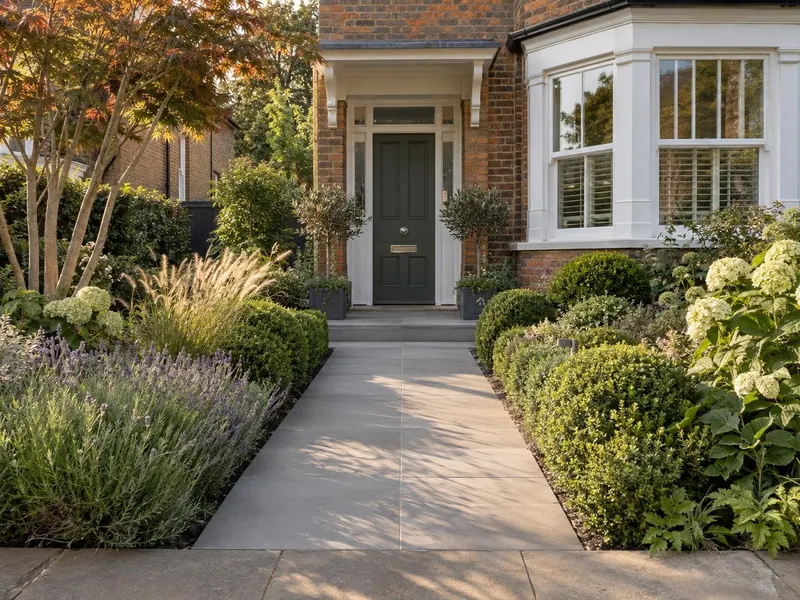
Close board and panels
The practical boundary fence. Concrete posts and gravel boards where the ground is damp, timber where it suits the garden.
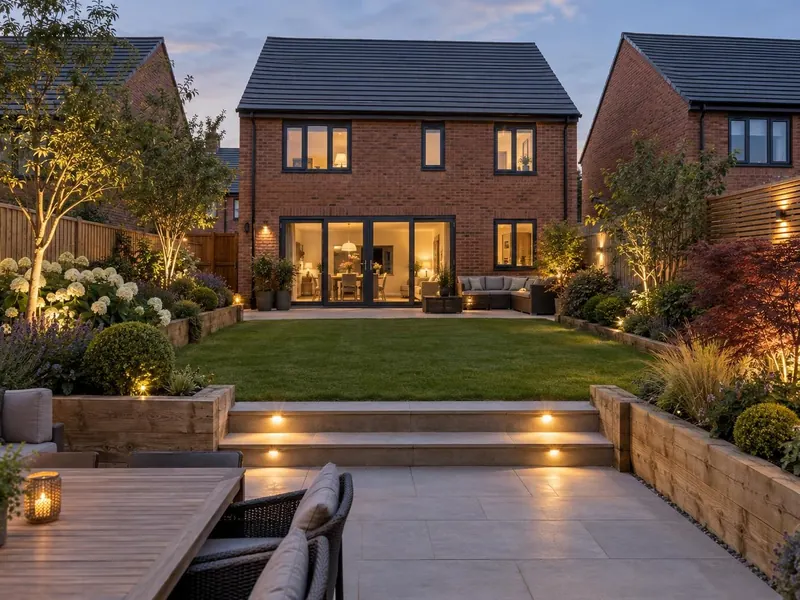
Composite decking
Low-maintenance composite boards on a treated frame at proper centres, so it does not bounce or twist. No annual sanding and oiling.
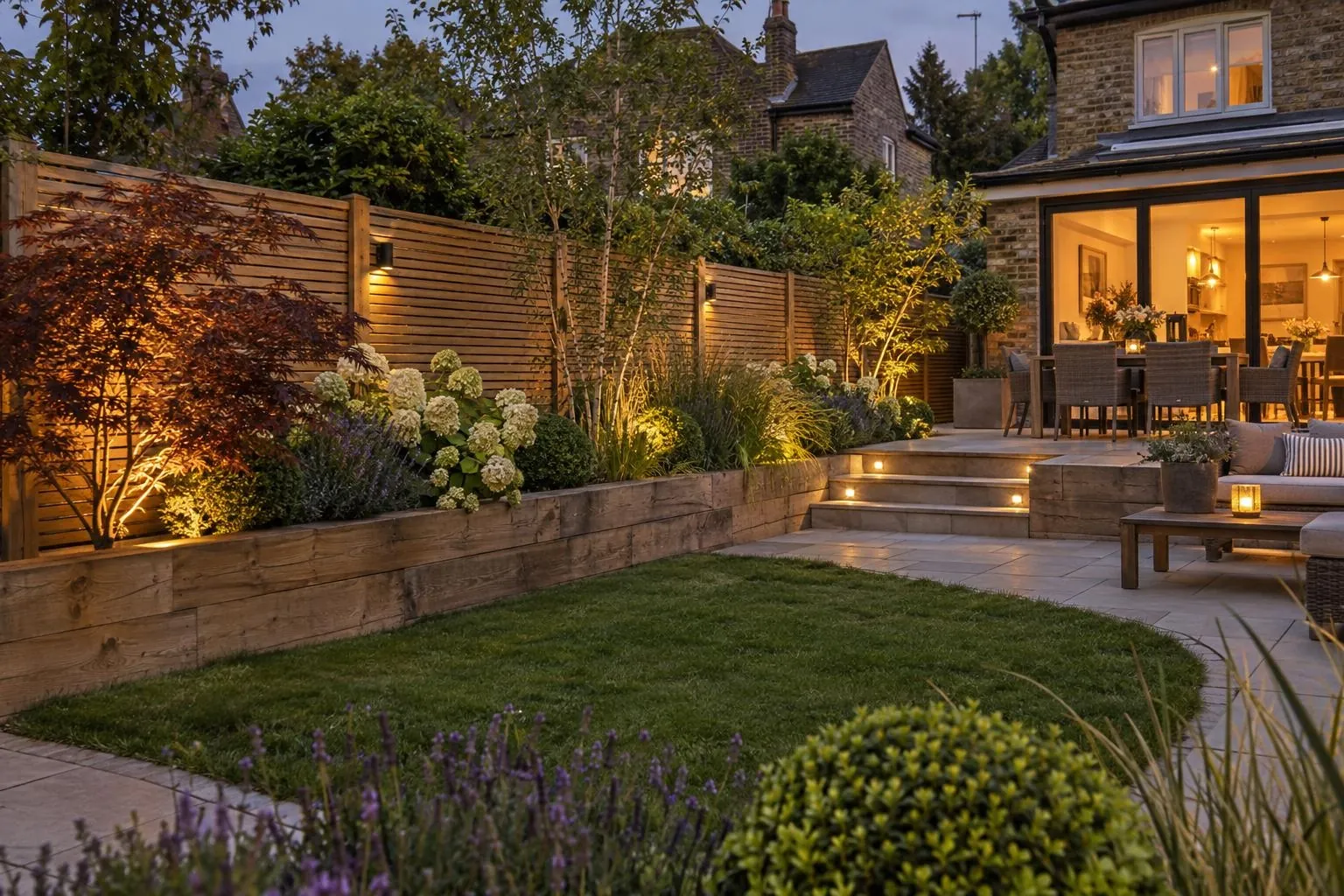
Sleeper walls and raised beds
Oak or treated softwood sleepers for raised beds and low retaining. Bitumen-backed, counterbored and plugged.
How we build a boundary
The difference between a fence that lasts eight years and one that lasts twenty is a couple of hundred pounds of concrete and an afternoon of care.
- Posts to 600mm minimum on a 1.8m fence, concrete collars shaped to shed water
- Gravel boards so no timber panel sits in wet ground
- Line and levels strung before the first post goes in
- Sleepers bitumen-painted on the buried and retained faces
- Fixings counterbored and plugged, not left proud
- Neighbour's side finished as carefully as yours
- Decking framed at 400mm centres so the boards never bounce
Things people ask us
Who owns the fence between my garden and my neighbour's?
Do I need planning permission for a tall garden fence?
Should I choose composite or timber fencing?
Can you fence a garden with no side access?
Which side of a fence should face the neighbour?
Are concrete or timber fence posts better?
How long does a closeboard fence last?
Which garden fence stands up best to strong wind?
Can I put trellis or a fence on top of a garden wall?
Do I need my neighbour's permission to replace a boundary fence?
Does the Party Wall Act apply to garden fences?
How long does it take to put up a new garden fence?
What fencing costs
Closeboard timber fencing typically costs £80–£100 per metre supplied and fitted on concrete posts. Composite and aluminium slatted fencing starts from about £240 per metre fitted at 1.8m high. Taking out the old fence is priced on the visit.
A fence, wall or gate is normally permitted development up to 2m high, or 1m where it sits next to a road or footpath used by vehicles. Listed buildings need consent, and some estates have planning conditions on front boundaries. Planning Portal: fences, gates and walls
Guide prices from 2026 online price guides, at the higher end. Your fixed price comes in writing after the free design visit.
Fencing near you
Local advice on ground, planning and prices for each town we cover.
- Fencing in Milton Keynes
- Fencing in Bletchley
- Fencing in Wolverton
- Fencing in Stony Stratford
- Fencing in Newport Pagnell
- Fencing in Woburn Sands
- Fencing in Bow Brickhill
- Fencing in Aspley Guise
- Fencing in Cranfield
- Fencing in Woburn
- Fencing in Hanslope
- Fencing in Olney
- Fencing in Leighton Buzzard
- Fencing in Winslow
- Fencing in Towcester
- Fencing in Ampthill
What fencing cost
Our fencing cost guide breaks the price down: what is included, what changes it and what to check in any quote.
Free design, free visit, free samples
We measure up, talk it through and send a written proposal with the build-up, the programme and one whole price. No pressure and no follow-up sales calls.